
Why HVAC Social Media Marketing Looks Different From Other Trades
Most small-business social advice defaults to generic tips: post consistently, engage with comments, run a giveaway. None of that is wrong, but it ignores what makes HVAC different — almost nobody follows an HVAC company because they're entertained. They follow, or find one mid-scroll, because they have a real problem: no heat, no AC, a strange smell from the furnace room.
That changes what "good content" means. A bakery can post a pretty croissant and get likes. An HVAC company posting a clean install photo isn't chasing likes — it's proving competence to someone who's currently comparing three companies and has zero technical way to judge any of them except how the work looks and how the crew talks about it.
Say you run a two-truck HVAC company in a mid-size Ontario city. Your competitor posts stock photos and holiday greetings. You post the actual furnace swap from Tuesday, with a two-line caption explaining what failed and why. Six months of that, and you're the account that looks like the real, competent option — not because of a bigger budget, because of better proof.
What to Actually Post in HVAC Social Media Marketing
The content that works for HVAC social media marketing splits into a few repeatable buckets, not a constant hunt for new ideas:
- Real job photos and short clips. Before/after shots of an install, a quick clip of a tech diagnosing a noise, a shot of a finished ductwork run. These need almost no editing — the honesty is the point.
- Plain-language explainers. A 30-second video on "why your AC is blowing warm air" answers a search people are already typing into Google, and it's exactly the kind of content that gets saved and shared when someone's unit dies.
- Seasonal timing posts. A reminder to book a furnace check-up in September, or an AC tune-up in May, posted 4-6 weeks before the seasonal rush — this is when people are actually planning, not panicking.
- The crew, briefly. One or two posts a month showing who actually shows up at the door. People let strangers into their home for HVAC work; a face they've seen online lowers that hesitation.
Skip anything that reads like corporate marketing — no stock photos of unrelated office workers, no vague "we care about our customers" captions. One University of Florida IFAS Extension analysis of a single organization's Facebook page found natural photos pulled a 21% engagement rate versus 6% for stock photos — more than triple. It's a small, single-organization study, not a universal law, but it matches what shows up anecdotally across local-service accounts: real job photos simply outperform anything staged.

That's the exact trap the short above digs into — posting alone isn't marketing, it's just activity. For an HVAC account, the difference is whether that activity ties back into an actual system for turning attention into calls, which is the whole next problem to solve.
Turning Followers Into Service Calls
A social page with good content but no path to booking is just a portfolio. Every HVAC social media marketing effort needs one clear next step, repeated consistently: a link to book, a number to call, or a simple "message us" prompt in the bio and in post captions — not buried once and forgotten.
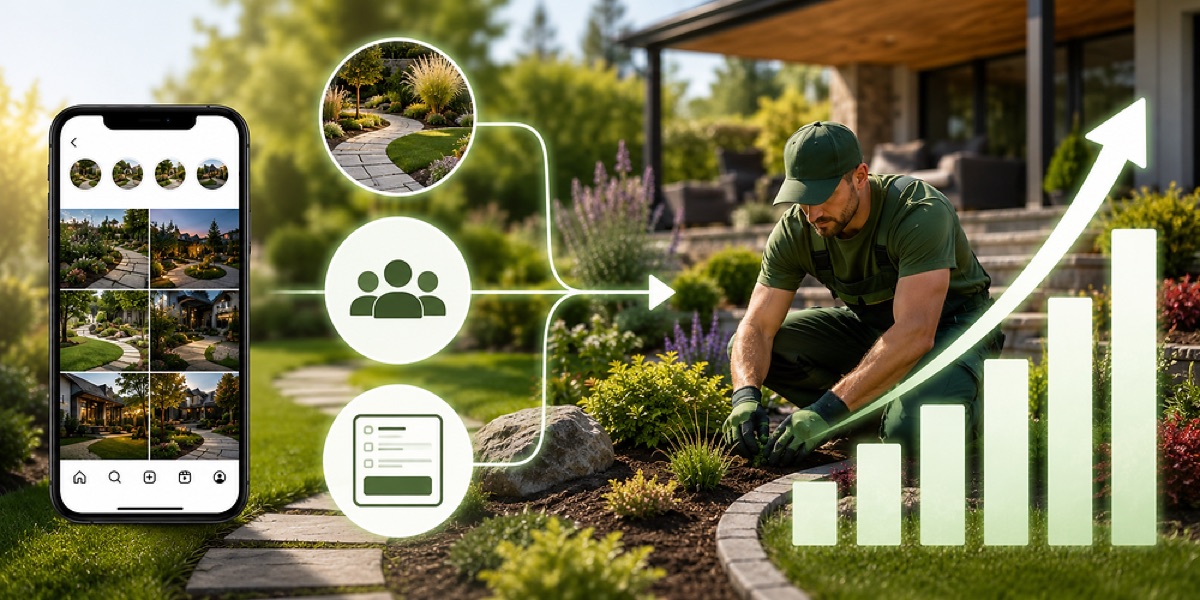
The realistic funnel looks like this: someone follows or sees a post because of a real problem (their AC just died) or a seasonal reminder (time to book a fall check-up). They check the profile for proof this company is legit — recent posts, real photos, reviews. Then they either call directly or click through to book. Miss any one of those three steps — no proof, no easy way to contact, no urgency — and the follow never converts.
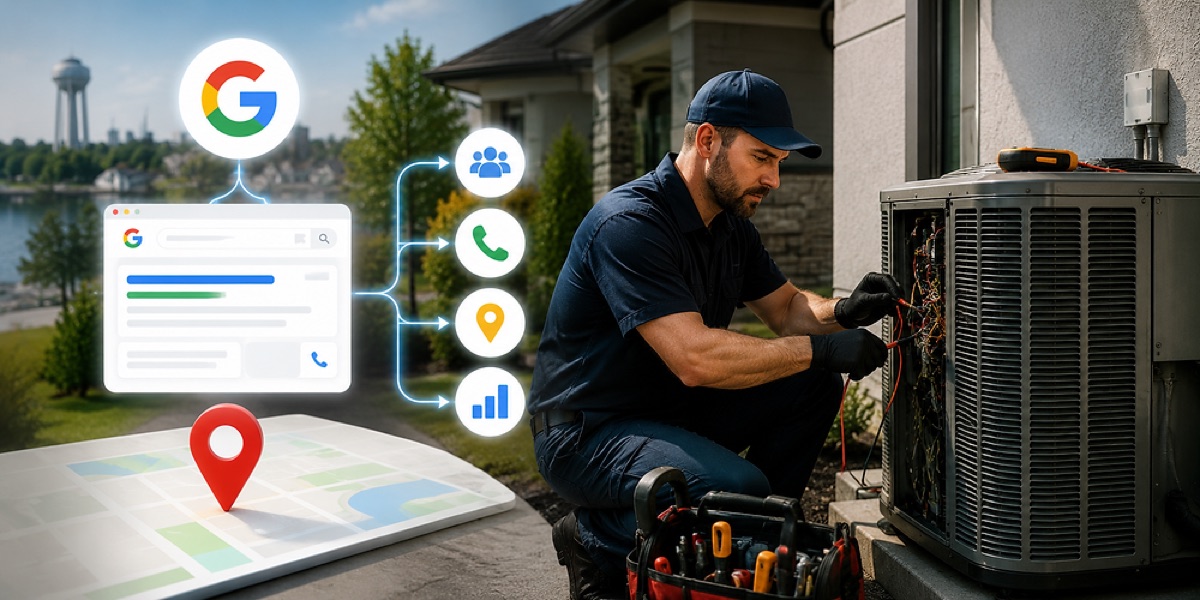
Say a homeowner's furnace stops working on a Sunday night. They search, land on an HVAC company's Instagram from a Google result, and see three months of real job photos and a pinned post with a phone number. That's a call within minutes. A blank or stock-photo-only page gets scrolled past for the next result.
Budget, Cadence and What to Expect
HVAC social media marketing doesn't need daily posting to work — 3-4 posts a week, consistently, beats a burst of daily content for two weeks that then goes quiet. Consistency signals an active, real business; gaps read as "did they close?"
Expect this channel to work alongside search, not replace it — most people still Google "HVAC repair near me" when something breaks. Social's job is to be the proof that closes the deal once they've found you, and to stay top-of-mind for the seasonal bookings that aren't emergencies. Budget for either an in-house person spending a few hours a week filming real jobs, or a marketing partner who can turn raw job-site footage into consistent posts — the second option usually wins on both time and output once you account for how much a technician's hour actually costs.
FAQ
How often should an HVAC company post on social media?
3-4 times a week is a realistic, sustainable cadence. Consistency matters far more than volume — a steady 3-4 posts beats a burst of 10 followed by a month of silence.
What should an HVAC company avoid posting?
Avoid generic stock photography, vague "we care about customers" captions, and anything that could belong to any business in any industry. The content that works is specific to real jobs, real trucks, and real technicians — genuinely showing the work.
Does social media actually generate HVAC leads, or is it just for brand awareness?
Both, but the mechanism matters: most people still search when something breaks. Social media's real job is being the proof point that converts that search into a call — recent job photos and an easy way to contact beat a generic "we're the best" claim every time.